


 Fast delivery


 Menu-EN
- PROMOTIONS
- Clamping Systems
- Tools for Metalworking
- Measuring tools
- Devices and instruments
- Industrial machinery
- Workshop equipment
- Loc-Line Modular Hose
- New products
- Products on sale
Vendor
Price
-
from
to
Vise or indispensable tool and its origin:
It is not known who in ancient times came up with the idea of fixing workpieces in such a way that they would not move under the pressure of sawing, cutting or drilling. Surprisingly, today, in the computer age, the vise as a purely mechanical tool is indispensable and no workshop filled with electronic devices can do without it.
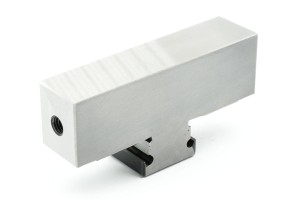 125 mm movable middle jaw (set) for precision vises FPZ 125
$94.06
Net price: $76.48
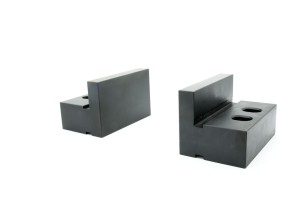 125 mm raised jaw inserts (set) for precision vises FPZ 125
$214.53
Net price: $174.42
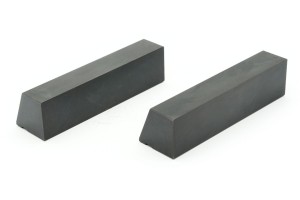 125 mm special soft jaw inserts (set) for precision vises FPZ 125
$79.21
Net price: $64.40
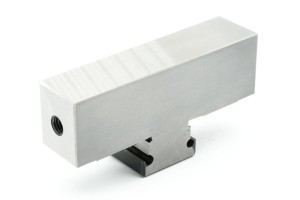 150 mm movable middle jaw (set) for precision vises FPZ 150
$108.92
Net price: $88.55
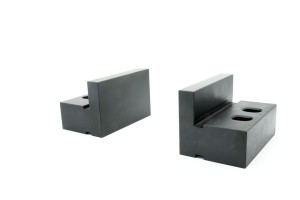 150 mm raised jaw inserts (set) for precision vises FPZ 150
$240.94
Net price: $195.88
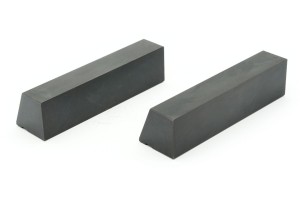 150 mm special soft jaw inserts (set) for precision vises FPZ 150
$97.36
Net price: $79.16
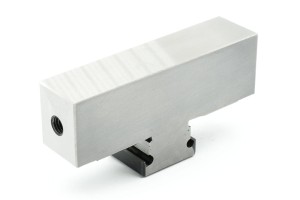 175 mm movable middle jaw (set) for precision vises FPZ 175
$120.47
Net price: $97.94
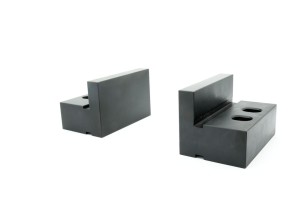 175 mm raised jaw inserts (set) for precision vises FPZ 175
$292.09
Net price: $237.48
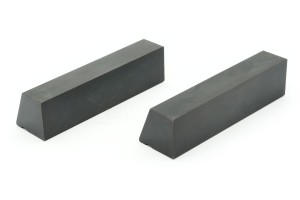 175 mm special soft jaw inserts (set) for precision vises FPZ 175
$125.42
Net price: $101.97
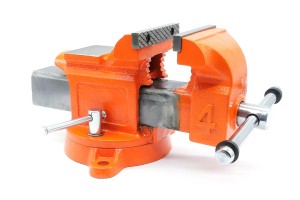 Bench Vise | 100 mm Serrated Jaws | with Anvil and 360° Swivel Base - FORWARD 30404
$112.22
Net price: $91.23
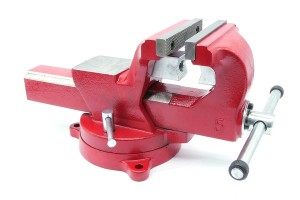 Bench Vise | 100 mm Serrated Jaws | with Anvil and 360° Swivel Base - FORWARD FSV04
$151.82
Net price: $123.43
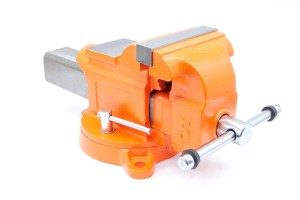 Bench Vise | 125 mm Serrated Jaws | with Anvil and 360° Swivel Base - FORWARD 30505
$125.42
Net price: $101.97
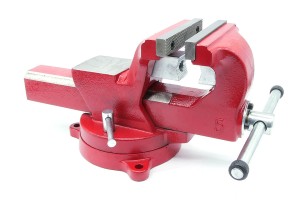 Bench Vise | 125 mm Serrated Jaws | with Anvil and 360° Swivel Base - FORWARD FSV05
$165.03
Net price: $134.17
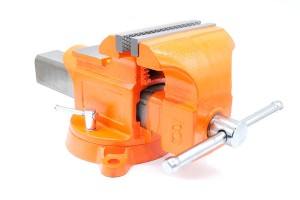 Bench Vise | 150 mm Serrated Jaws | with Anvil and 360° Swivel Base - FORWARD 30606
$145.22
Net price: $118.07
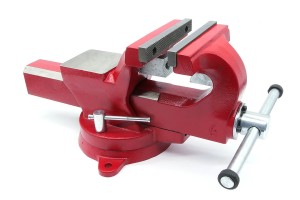 Bench Vise | 150 mm Serrated Jaws | with Anvil and 360° Swivel Base - FORWARD FSV06
$221.13
Net price: $179.78
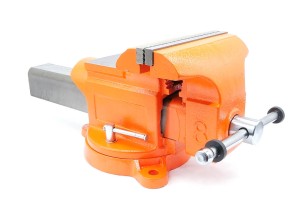 Bench Vise | 200 mm Serrated Jaws | with Anvil and 360° Swivel Base - FORWARD 30808
$234.34
Net price: $190.52
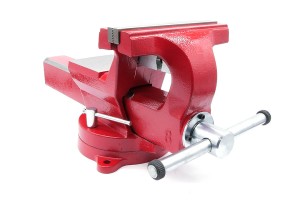 Bench Vise | 200 mm Serrated Jaws | with Anvil and 360° Swivel Base - FORWARD FSV08
$326.75
Net price: $265.65
 Double Machine Vise 160 mm with Double-Ended Screw – DARMET FCD160/2X125
$811.63
Net price: $659.87
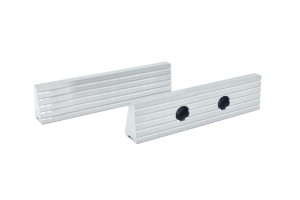 Grooved Jaw Inserts 150 mm (Set) for FPZV Precision Vises - DARMET
$82.51
Net price: $67.08
 Hydraulic Machine Vise 135 mm – DARMET HMV135/240
$391.73
Net price: $318.48
 Hydraulic Machine Vise 154 mm – DARMET HMV 154/320
$399.42
Net price: $324.73
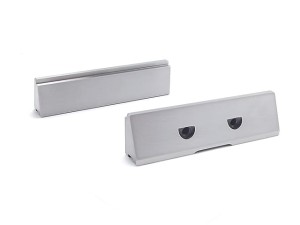 Jaw inserts with step 200 mm (set) for precision vises FPZ - DARMET
$137.30
Net price: $111.63
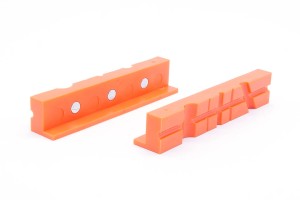 Magnetic Soft Jaws 158 mm | TPU Material - FORWARD 36006
$11.22
Net price: $9.12
 Precision Machine Steel Vise 150 mm FPZB, CNC, for Milling DARMET - 150/300
$893.12
Net price: $726.11
 Precision machine vise horizontal-vertical steel 175x500 mm - FPZV
$1,663.46
Net price: $1,352.40
 Precision Steel Vise 175 mm – FPZB 175/200
$821.11
Net price: $667.57
 Precision Steel Vise 200 mm – FPZB 200/200
$1,199.84
Net price: $975.48
 Prism Machine Vise | 160 mm Jaw Width | Clamping Range for Shafts 10–105 mm – FQV 160/10-110
$429.07
Net price: $348.83
 Quick-Release Vise for Drill Press | 160 mm Workshop Machine Vise – WQC 160/150
$108.94
Net price: $88.57
 Self-Centering Machine Vise 100 mm – CSV-4 DARMET
$811.71
Net price: $659.93
A decisive step in the development of this indispensable tool into its present form was the replacement of wedge and hammer clamping techniques with threaded clamps in the Middle Ages. The drawback: the movable jaws could only be guided radially, making the clamped objects tilt less. It was not until the introduction of the parallel vise in 1750, on which the movable jaws were guided on horizontal, adjustable slots, that a breakthrough was made for optimal use.
In 1830, the first cast iron vise was produced in England. Liquid iron could be easily transformed into any shape. During pouring, air pockets, or cavities, often appeared in the casting. The structure was thus porous and brittle. The result: insufficient strength for heavier tasks, causing cracks. For this reason, steel is used, for example, to make safety-relevant parts in the automotive industry and high-quality unbreakable vices. The structure of steel is unified by forging. With the introduction of the high impact hammer and the use of forges with tight tolerances, the problem of accurate shaping has been solved.
When Josef Heuer, an experimenter and inventor from Iserloh, invented a new forging vise design with a revolutionary biprismatic slide in 1925, the Brockhaus company in Plettenberg, Sauerland, was already one of the largest die forges in Germany. The importance of the invention was recognized with foresight. In 1927, a patent application was filed and production of this vise began. Thus was born the HEUER vise, which is known worldwide and sells millions of units.
Successful start and development
The Chronicle said: "in the same year, with great effort, the new vise was successfully presented for the first time at the autumn trade fair in Leipzig, which resulted in significant orders." Not surprisingly, the guaranteed unbreakability of pure steel "HEUER - PRIMUS" achieved a record award in its class. This success did not allow Brockhaus technicians to settle on their laurels. With HEUER Primus, they developed a vise that opened from the back, a vise that opened from the front - toward the operator. This made it possible to clamp and machine even large workpieces vertically in front of the workbench. The new model was appropriately named HEUER FRONT. The operability of the HEUER FRONT has been further improved and its versatility increased. Thus, the guide screw with trapezoidal double thread provided large, precise and fast clamping force and the forged pipe gripping jaws provided additional application. Dedicated pipe vices then become unnecessary.
The path to the perfect tool
After World War II, work on new products began with great dedication at Brockhaus Heuer. During the reconstruction of Germany, vices were in greater demand than ever. Among other things, the "Made in Germany" label for technical products contributed to the worldwide success. A word about "Made in Germany": HEUER vices have been produced in Germany alone for more than 80 years. Modern production methods, especially in welding and forging, led inventor Josef Heuer to seek a new patent in 1948. Today's HEUER vise is based on the concept of that patent. In parallel with improving production methods, Brockhaus technicians worked to improve models according to the principle: "small details make a big difference." For example, through the pressure plate, spring and snap ring, the spindle was adjusted so that backlash was eliminated.
Nowadays, HEUER's vise has a centrally adjustable guide, forged jaws as standard, a protected spindle position, and, due to its slenderness thanks to die-forged guide rails, a favorable clamping capacity.